
Florissant Previous Residents by Era
For a Florissant address, the useful source changes with the era. County tax and parcel material offer a current starting point, but they do not settle who occupied a home years ago. Recorded instruments connect owners to a legal parcel description. County directories and reverse directories can place an occupant at a street number for a published year. The federal census is another historical household source, with 1950 the latest released census year noted in the research. Keep the record date beside every name, because ownership, occupancy, and a mailing address can differ.
| Source | Years It Covers | Where Held | What It Shows |
|---|---|---|---|
| County Tax Quick Search | Selected tax year | St. Louis County online portal | Year, property number, displayed name, address, and type |
| Recorder instruments | Online coverage not established in research | Recorder and deed-copy route | Recorded deeds, liens, plats, easements, and other instruments |
| SLCL county directories | 1893, 1896, 1903, 1909, 1917, 1920, 1922, 1923, 1930, 1932 | St. Louis County Library | Dated name and address entries in the located runs |
| Haines Criss-Cross directories | Dates vary by volume | SLCL, R 917.7865 H153 | Residents arranged by street and house number |
| Federal census | Historical schedules through the 1950 release | National Archives and research libraries | Household evidence that needs address and date checks |
Begin with the modern property key when the address is known. Begin with a reverse directory when the question is about an older household. A title question belongs with recorded documents, while a former occupant should be corroborated through a dated directory, census image, newspaper, cemetery, or other historical source.
Florissant Previous Residents Property Keys
The official Florissant Street Guide is the first check for an exact address and ZIP. Its July 2022 entries also identify street ranges, wards, descriptions, and jurisdiction notes. That context matters when an old address has a different spelling or a road crosses a city and county service boundary. Preserve the guide's displayed street form, then try sensible variants such as St. or Saint and Rue or Road only as search aids.
Next, use County Tax Quick Search with a Property Number, Owner Name, or Address. The visible result columns are Year, Number, Name, Address, and Type. It is a tax and payment search, not a complete assessor card, so call its address field the portal-displayed address unless a live record labels it otherwise. Record the number, then compare the parcel in the county GIS data and Land Explorer resources. Cadastral, market sales and value, and zoning and land-use layers help identify the parcel, but a map shape is not a deed or proof that a person lived there.
Note: Save the street-guide row, tax year, property number, GIS layer name, and access date before moving to a recorded document.
Florissant Previous Residents Deed Chain
The St. Louis County Recorder of Deeds holds public recorded instruments affecting property, including deeds, deeds of trust, releases, liens, plats, easements, and collector deeds. Use the tax result and parcel context to find the right instrument. The live online Recorder search did not render during research, so no online date range or search-field list is claimed here. When the index cannot be used online, the office and its copy-order process provide the documented fallback.
St. Louis County Recorder of Deeds
41 S Central Ave, Clayton, MO 63105
314-615-7100
Confirm public-counter hours directly because county search-hour references were inconsistent in the inspected material.
The official deed-copy order form asks for the property address, owner or owners, approximate purchase date, document type, and either book and page or a document number. It also has copy and certification choices. Assessor book and page information is not the Recorder's book and page reference.
The Recorder's deed-copy order form shows the fields used to narrow a Florissant previous residents document request.
- Confirm the exact address, ZIP, and property number from the Street Guide and county tax result.
- Compare the parcel in GIS with the property's legal description and subdivision or lot information.
- Identify the current or known owner, then locate that purchase instrument through the Recorder index or the copy-order route.
- Read the prior owner named in the document and repeat the search backward, preserving each recording date and reference.
- Mark gaps instead of guessing. A tax update may lag a recording, and a parcel may have more than one legal interest.
- Grantor
- The party transferring an interest in a recorded instrument.
- Grantee
- The party receiving that interest. A prior owner is often found by following this role across earlier documents.
- Chain of title
- The dated sequence of recorded transfers or interests tied to one property.
- Legal description
- The recorded lot, block, subdivision, or other land description that can remain steadier than a street address.
Florissant Past Residents in Directories
Ownership is only part of the Florissant past residents trail. The St. Louis County Library directory collection allows a researcher to choose a county directory year, search a surname or part of an address, and then inspect the scanned book. The located county runs are 1893, 1896, 1903, 1909, 1917, 1920, 1922, 1923, 1930, and 1932. A result is a lead until the page image, title, year, and city or county label have been checked.
SLCL History and Genealogy collections also identify maps, atlases, plat maps, newspapers, cemeteries, church and funeral records, and microfilm as useful local context. There is no dedicated Florissant house-history guide in the inspected official sources. The documented approach is a chain: historic-site or landmark material, parcel and tax data, Recorder documents, plats, directories or phone books, then newspapers and map material where available.
The SLCL collection overview is the starting point for Florissant previous residents sources beyond a modern parcel record.
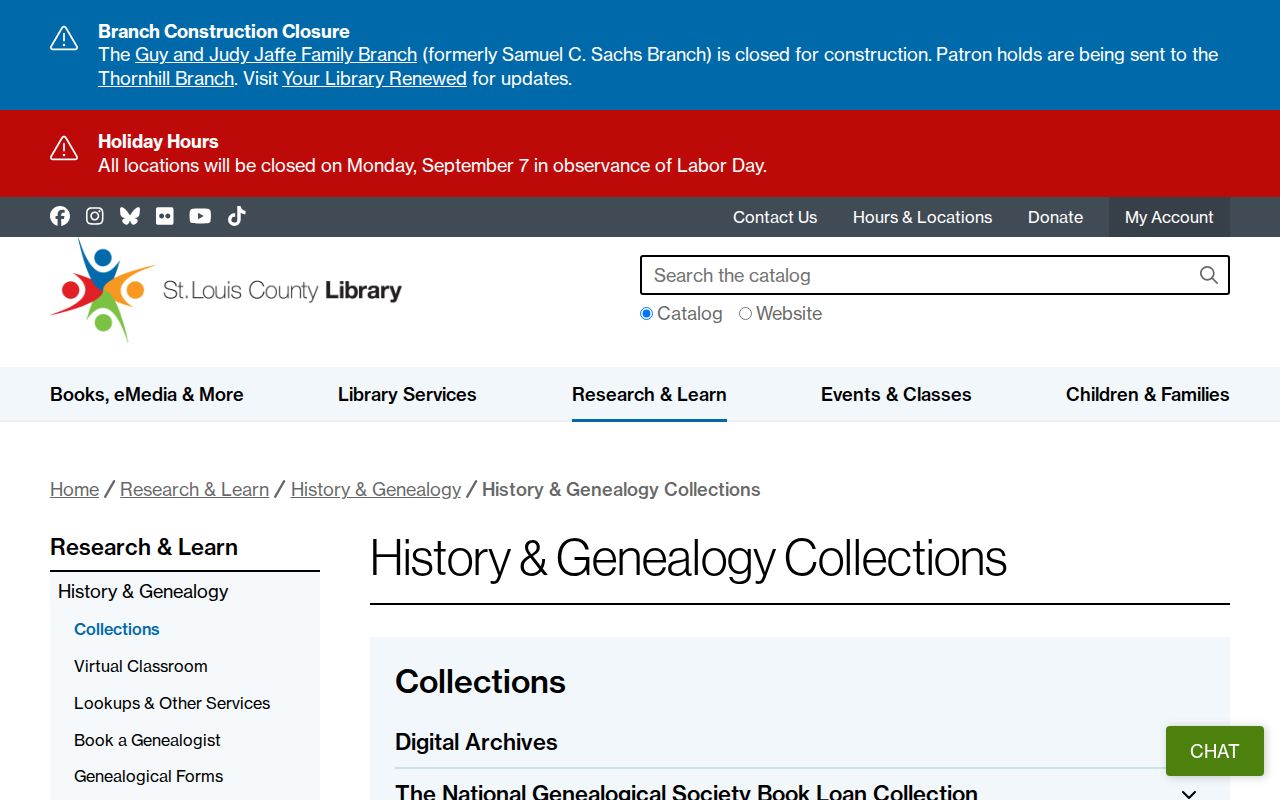
The separately published Haines Criss-Cross series, call number R 917.7865 H153, is especially useful because it arranges residences by street and house number. Read the address entry, move to the surname section, and compare it with a deed, obituary, or other dated source. The historical volumes are described in more depth on the Florissant city directory page.
Florissant Previous Residents Household Pairing
Directories and census records answer a different question from the Recorder. A directory may place a named person at an address for its publication year. A census schedule can add household context, but a street number must still be matched carefully because names repeat, addresses change, and the record may use a historic street form. The research identifies 1950 as the latest publicly released federal census and directs historical work to archival holdings.
- Choose one directory year and verify the scanned page, not only the search hit.
- Keep the exact address string and nearby cross-street language with the entry.
- Locate the closest released census record, then compare names, age patterns, and address evidence without treating a name alone as a match.
- Use SLCL newspapers, obituaries, cemetery material, and staff research services to test a household transition or departure.
When a family disappears from one directory, the next record may be an obituary, burial source, probate file, or a deed from a later owner. That sequence can explain an address change, but it should never be used to infer a current person's location.
Note: A scanned directory page is stronger evidence than an OCR result, so retain its title, year, city or county label, and page.
Florissant Previous Residents Before 1877
Florissant's first local government dates to 1786, and the historical record trail does not always sit with a modern county custodian. The 1877 split between St. Louis City and St. Louis County changed custody. The St. Louis County Library cautions that material from the earlier county period may now be held by City of St. Louis offices. Label the jurisdiction in effect on the date of the event before treating a missing county search result as a dead end.
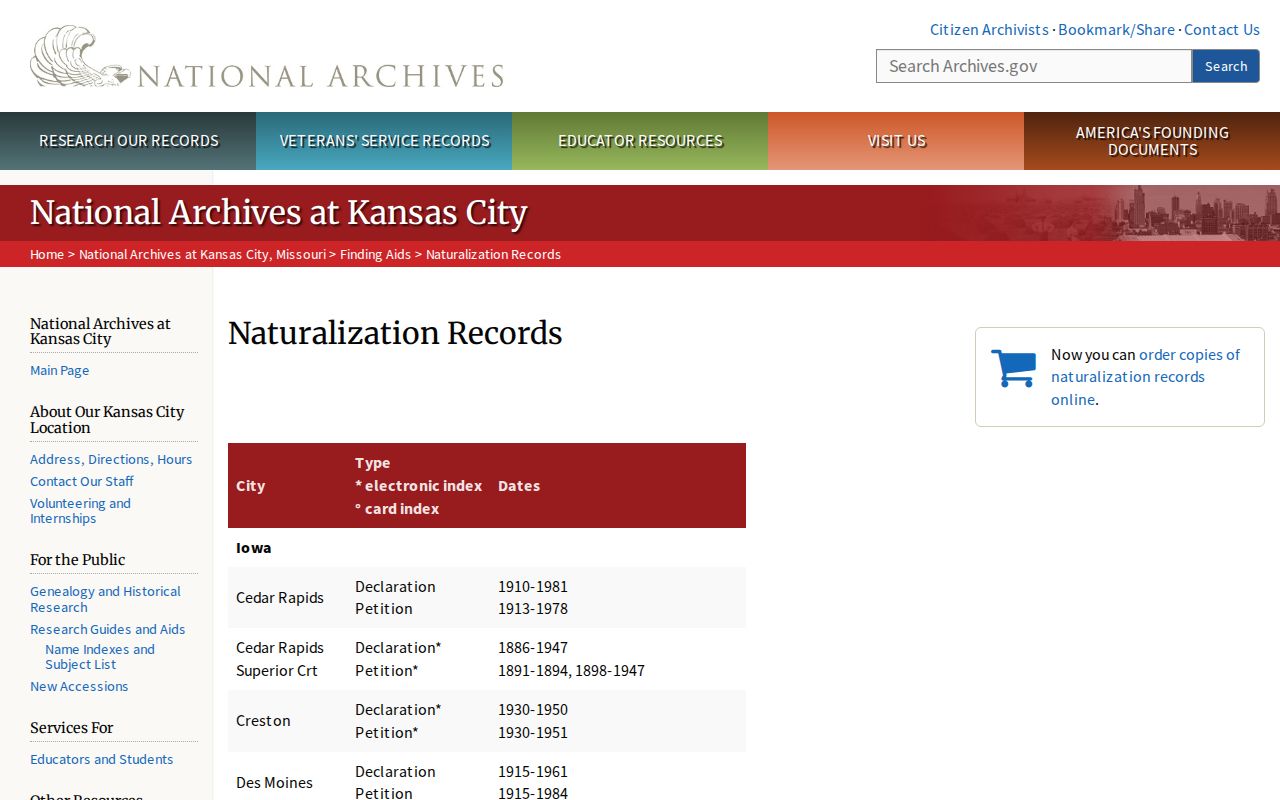
Early land claims and plats can predate modern parcel numbers. Cross-read the legal description with library land-claim resources, maps, and archive material. The National Archives naturalization finding aid is one route when a household's record crosses county and federal custody: it identifies St. Louis District Court declarations from 1870 to 1929 and petitions from 1868 to 1991, alongside St. Louis Circuit Court series.
NARA's St. Louis naturalization finding aid illustrates a Florissant previous residents route that may extend beyond property files.
Florissant Previous Residents Tax Sale Caveat
A tax-sale notice is not a shortcut to a clear ownership history. The county's 2025 real-property tax-sale listings describe sealed bids, recording-fee instructions, and a key limitation: a collector's deed transfers only the interest held and does not guarantee clear title. Record the instrument type separately from a warranty deed or quitclaim deed when tracing prior ownership.
The county tax-sale listings provide the wording behind this Florissant previous residents title caution.
Warranty deeds, quitclaim deeds, deeds of trust, releases, liens, plats, easements, and collector deeds each show a different kind of recorded action. Keep document type, recording date, book and page or document number, and legal description in the same research note.
Note: Ask the Recorder about current copy fees and delivery before paying for a document or treating an order as complete.
Florissant Previous Residents Cemetery Trail
Florissant's historical places can help date a former household without identifying a modern resident. The city says the first cemetery at Spanish Land Grant Park was given in 1788. Remains were moved more than once, including to a mass grave, St. Ferdinand, and Sacred Heart, while some remain at the park. A burial search therefore needs the cemetery history alongside church, newspaper, and directory evidence.
Historic-place dates are not proof that a particular family occupied the address. For a property story, keep the landmark date, directory date, deed recording date, and tax year separate. That simple separation prevents a long Florissant address history from becoming a chain of assumptions.
Lawful use. Florissant previous residents research is appropriate for family history, estate questions, and house history. Do not use historical or public records to track, harass, intimidate, or harm any living person.